Title here
Summary here
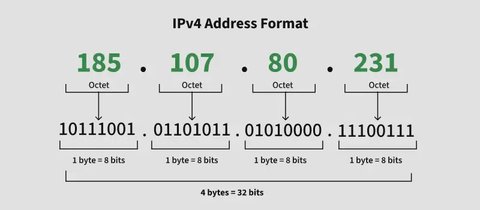
| 27 | 26 | 25 | 24 | 23 | 22 | 21 | 20 |
|---|---|---|---|---|---|---|---|
| 128 | 64 | 32 | 16 | 8 | 4 | 2 | 1 |
Example:
10100100 -> 128 + 32 + 8 = 188 decimal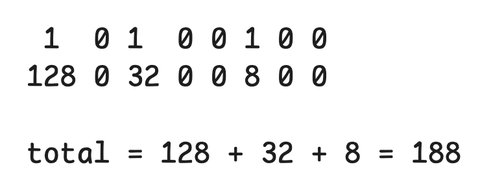
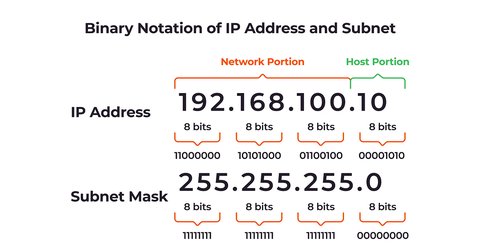
How to find the prefix /25 in dotted-decimal form
11111111.11111111.11111111.10000000 -> 255.255.255.128Number of networks = 2n
Example:
Count the number of networks in the prefix /24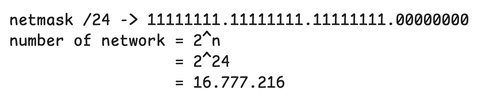
What does “number of /24 networks” mean?
It means: How many unique /24 subnets can exist across all of IPv4.
0.0.0.0/24
0.0.1.0/24
0.0.2.0/24
...
192.168.1.0/24
...
255.255.255.0/24Number of hosts = 2n - 2
Example:
Calculate the number of hosts available on each network on the /24 prefix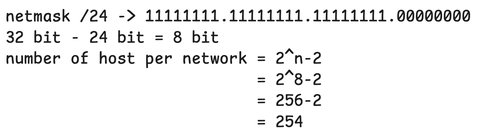
Subnetting is a method for breaking down a classful IP network into smaller subnetworks. The reasons for using subnetting include:
A subnet mask is a 32-bit value that divides an IP address into network and host portions. It is used to determine which part of an IP address is the network address and which part is the host address.
Number of subnet = 2(target_prefix - original_prefix)
Example: Calculate how many subnets are generated if network 172.16.0.0/16 is subneted with /18
Number of subnet = 2^(target_prefix - original_prefix)
                 = 2^(18 - 16)
                 = 2^2
= 4Block Subnet = 256 - n
Where n is the position where the bits of the prefix stop (at the octet)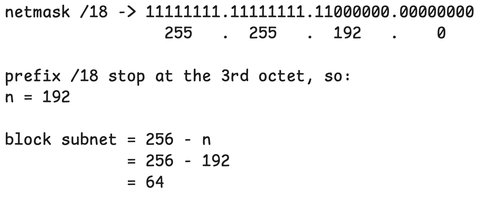
The subnet block obtained for the /18 prefix is 64
172.16.0.0/18 -> 172.16.0.0 - 172.16.63.255
172.16.64.0/18 -> 172.16.64.0 - 172.16.127.255
172.16.128.0/18 -> 172.16.128.0 - 172.16.191.255
172.16.192.0/18 -> 172.16.192.0 - 172.16.255.255Number of usable IP = 2^(32 - target_prefix) - 2
Example: Calculate the number of usable IP in each subnet of the /18 prefix
Number of usable IP = 2^(32 - 18) - 2
                    = 2^14 - 2
                    = 16384 - 2
                    = 16382
Total IP = Number of subnet * Number of usable IP
= 4 * 16382
= 65528